

A household may feel personal and informal, but behind the scenes it requires planning, systems, communication, and consistent execution. Many families underestimate the complexity of household management. As a result, they work incredibly hard yet still end up in a home environment that feels stressful, messy, and exhausting.
In Hong Kong, many families try to ease this burden by hiring a domestic helper. While this often provides valuable support, it also makes the operational side of household management more visible. Cleaning, shopping, cooking, childcare, pet care, and elderly support all need to be coordinated effectively if the home is to run smoothly.
Like any well-run business, a well-run household relies on systems. It involves scheduling, prioritizing, maintaining standards, managing supplies, coordinating family needs, and making sure recurring tasks are completed consistently. Home management is not simply about working hard — it is about managing multiple interconnected processes effectively. In other words, a household needs not only effort, but also systems, decision-making, and clear responsibilities.
When employers hire a domestic helper, they often expect daily life to become easier. Instead, many find themselves constantly checking, reminding, correcting, and supervising. This ongoing oversight can feel overwhelming. In most cases, this does not happen because anyone lacks good intentions. It happens because expectations were never fully clarified, household systems were never properly established, and no structured training was provided.
Why Hiring a Domestic Helper Does Not Always Reduce Stress
A domestic helper cannot be expected to work independently within a household system that has never been clearly built.
Many employers try to provide a detailed daily routine and set clear priorities, such as childcare. However, if a helper has not been trained in time management, prioritization, and household workflow, it can still be difficult to make good decisions throughout the day. This creates stress for the helper and often leads to repeated questions, hesitation, or dependence on constant instructions.
For instance, if childcare is the top priority in the afternoon but meal preparation, laundry, and tidying are also expected, a helper needs more than a task list. She needs the ability to prioritize, judge timing, and follow a system that reflects the family’s real priorities.
Proper training builds both confidence and independence. When a domestic helper understands how the household operates, what standards are expected, and how recurring responsibilities should be managed, she can work more proactively and consistently. Training reduces errors, minimizes misunderstandings, and makes it easier for the entire household to function smoothly.
Effective domestic helper training may include:
- routines
- planning
- prioritization
- time control
- workspace organization
- project-style management of recurring responsibilities
The result is a calmer, more functional home. Employers experience less stress, fewer repeated corrections, and more confidence in the daily running of the household. Helpers gain greater clarity, independence, and trust. The entire family benefits from better consistency and smoother daily life.
Personal Productivity Training
A well-run household does not happen by chance. It is built through clear systems, communication, and practical training. Our company helps domestic helpers develop the structure, confidence, and skills needed to work more independently, so households in Hong Kong can function more smoothly. When home management improves, the entire family benefits from less stress, better consistency, and a calmer daily life.
If you want a more structured and functional household, the solution is not more supervision — it is better systems and proper training.
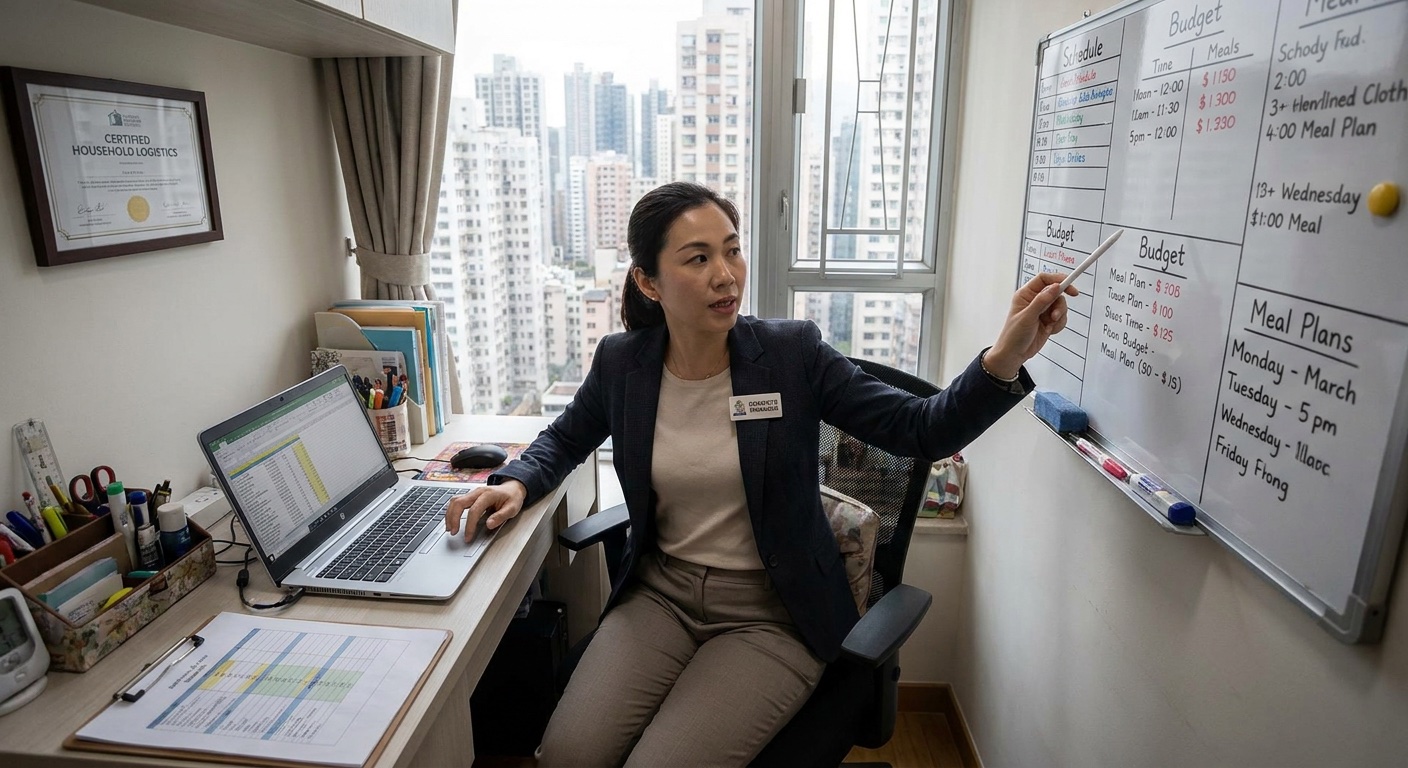
Our company helps domestic helpers build the practical skills needed to support smoother, more independent household management.